Safety Precautions on the use of Quartz Slab Clamps - Keep Your Team and Slabs Safe
Apr 09, 2026
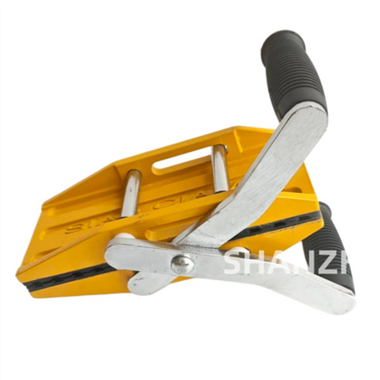
It may sound easy to clamp and move slabs of quartz; however, a single misstep can result in thousands of dollars of wasted material or injuries. Quartz slab clamps are constructed with toughness, yet they can only be safely employed when utilized properly. These are tips that are based on shop experience and safety standards that have helped in averting numerous accidents.
Unloading bundles, repositioning to fabricate, or staging finished countertops, these best practices ensure that your team is safe and your slabs are intact. They are particularly necessary in large stores that also have natural stone splitters or diamond drum wheels, with slabs being continuously station-to-station.
Inspection Before Use Daily
Always assume a clamp is not ready. Check the following points in the morning:
Rubber pads - No rips, fissures, or absent pieces. Worn pads slip.
Pivot points and bolts - Tight and greased. Loose components are subject to load failure.
Locking mechanism - Test auto-lock and release empty first.
Label load rating - Make sure that it matches your heaviest quartz slabs.
Frame cracks - Particularly where there are welds and stress points.
One rule of fabricator:--If it does not look good, it will not lift slabs. Fix only by skilled technicians- do not field- repair important parts.
Proper Slab Positioning and Spotting
Positioning is more than you believe:
Position the clamp in the center of the slab, completely in the jaws.
No weak areas - There are no fissures, veins, or soft inclusions beneath clamps.
Always have a spotter- They check positioning and clear fall zones prior to lift.
Lift gradually - First, pick off the slack of the cable, then wait 2-3 seconds, and lift.
Do not drag - Clamps should be perpendicular to slabs.
Pro tip: Label your clamps with thickness ranges of slabs. Improperly sized slabs will not fit and will slip.
PPE and Clear Communication
Safety gear isn't optional:
Hard hats – Never in places where there are slabs above.
Safety glass(s) – Chips on clamp release.
Steel-toe shoes - Heavy soles will not pardon toe stubs.
High-vis vests - These are crucial when the forklift and spotters are operating simultaneously.
Gloves made of leather - Grip handles without loss of dexterity.
Apply hand signals or radios between the spotter and the operator. Do not always think that because it looks good, it is time to lift.
Load Limits and Single Slab Rule
This one's non-negotiable:
One slab to one clamp pair - Never stack, bundle, or double up of any size.
Remain below rated capacity - Factor 1.5x dynamic loads safety margin.
Dry slabs alone - Wet quartz is a rubber slip. Dry thoroughly first.
No side-loading - Lift angle should be vertical. Rubber is shredded by angled pulls.
Even a light 20mm quartz has a weight of hundreds of pounds per square meter. Respect the physics.
Emergency Training and Procedures
Everybody must be aware:
Drop zone awareness - Keep out of the fall shadow of the slab.
Abort signals - Raise if stable, or lower, clear signal.
First aid stations - Be aware of where and what is in them.
Clamp failure exercise – Clear space, tie up the slab, tag out the bad clamp.
Training: Hire trainees and shadow them on the first 10 lifts. Experience compounds safety.
Your Stone Workflow integration
These uses are in perfect harmony with other stone implements:
Feed natural face stone splitters securely with clamps with no edge damage.
Before diamond drum wheel edge profiling, position slabs are firmly in place.
Minimize transfers between saws, CNC routers, and polish lines.
Stores with stringent clamp guidelines have almost zero handling incidents. Your slabs and team right merit that.