


Affordable foam backing pads for industry
High-quality foam padding with adhesive backing, ideal for cushioning, soundproofing, and insulation. Easy to apply and durable, perfect for both DIY projects and professional use. Order now for reliable, customizable padding solutions.
Built for long-lasting performance in harsh environments, these foam backing pads offer exceptional durability and efficiency for both professional and industrial use.
Description
Xiamen Best Only Diamond Tools, which is located in the beautiful seaside city of Xiamen was established in 2013. We are one of the best diamond tool suppliers in China. As our company name is " BEST ONLY", our company slogan is: To do the best, or not to do ! With over 10 years of diamond tools production and exporting experience, we are dedicated to providing you with diamond tools at both competitive prices and high quality effectively. Our products are welcome in the markets of Europe, North and South America, Southeast Asia, Middle Asia, etc. A good reputation has won praise and trust from home and abroad.



Why Choose Us
Our Factory
Xiamen Best Only Diamond Tools, which is located in the beautiful seaside city of Xiamen was established in 2013. We are one of the best diamond tool suppliers in China. As our company name is " BEST ONLY", our company slogan is: To do the best, or not to do!
Our Product
Xiamen Best Only Diamond Tools specializes in different types of stone processing tools. Our main products including Resin Diamond Polishing Pads, 3 Steps Diamond Polishing Pads, Dry Diamond Polishing Pads, Wet Diamond Polishing Pads, Metal Diamond Polishing Pads, Diamond Cup Wheels, Diamond Milling Wheels, Electroplated Diamond Polishing Pads, Diamond Polishing Belts, Diamond Polishing Sheets, Diamond Hand Polishing Pads, Diamond Core Bits, Diamond Brushes, Backing Pads, CNC Router Bits, Engraving Tools, etc.
Product Application
Xiamen Best Only Diamond Tools products are widely used in the grinding and polishing field of natural stone, sintered stone, engineered stone, ceramic, and concrete, etc.
Production Market
With over 10 years of diamond tools production and exporting experience, we are dedicated to providing you with diamond tools at both competitive prices and high quality. Our products are welcome in the markets of Europe, North and South America, Southeast Asia, Middle Asia, etc. A good reputation has won praise and trust from home and abroad.
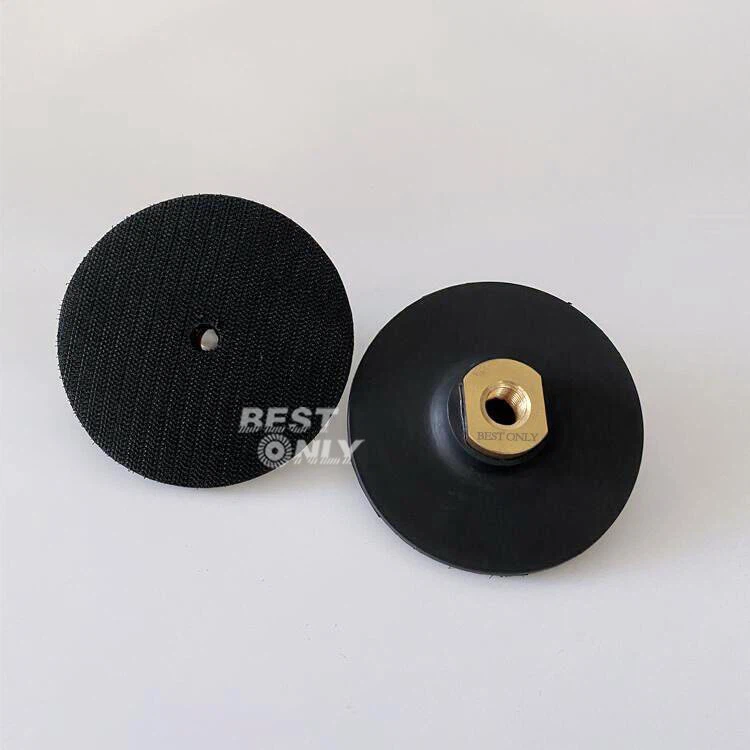
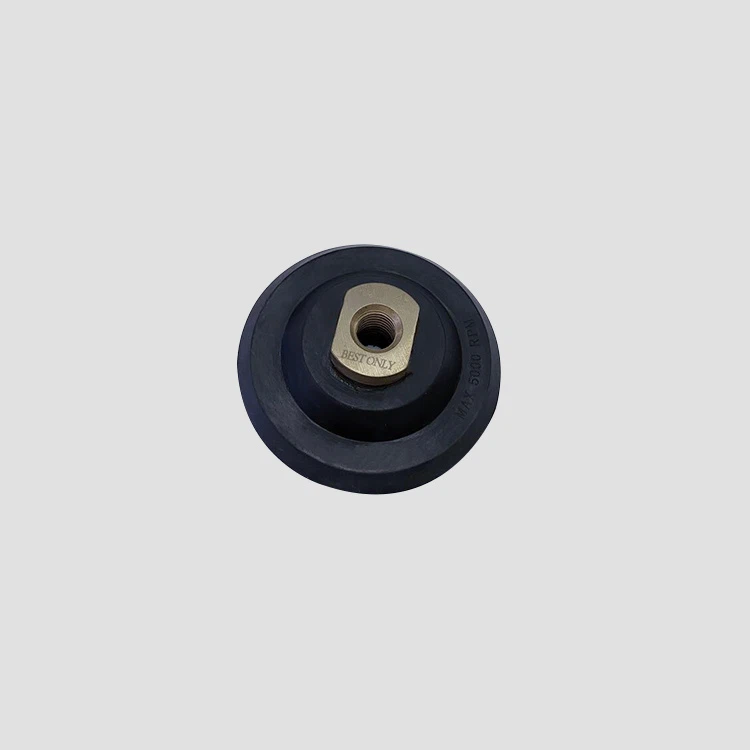
Foam backing pads are high-quality, long-lasting foam pads designed for sanding and polishing applications. Featuring a hook-and-loop closure, these pads securely hold sandpaper with a hook-and-loop backing, allowing for quick and easy paper changes. The foam rubber layer between the pad surface and the nut conforms to the material you're sanding, ensuring consistent results.
Foam backing pads are essential for achieving high-quality results in stone and concrete polishing. Designed for industrial applications, our foam pads offer superior cushioning and durability, enhancing the efficiency of your machines. Available for bulk orders, we provide flexible pricing options for businesses and contractors. Custom sizes and specifications can be tailored to meet your specific needs.
We are a professional supplier of Foam Backing Pads, and we welcome your bulk purchases!


Advantages of Foam Backing Pads
Increased disc flexibility
Foam backing pads provide an extra cushioning layer that allows the disc to move more freely. This added range of motion helps the sander more easily conform to rounded edges and contours, preventing uneven sanding and jagged edges.
Decreased risk of injury
The foam backing pads act as a cushion to absorb strong vibrations, reducing the risk of ergonomic injuries like carpal tunnel syndrome. Plus, smoother work is generally more enjoyable.
More even distribution of pressure
Using the foam backing pads with maximum surface area helps ensure a uniform finish on every surface - even softer ones where nicks and gouges are more visible.
Reduced wear
The foam backing pads decrease the wear and tear the machine sustains, which can extend the life of both your sanding discs and your sander. Additionally, backing pads enable airflow behind the sanding disc and provide a space for debris to flow out, resulting in improved contact and more effective sanding.
Enhanced control
Sanding on an uneven surface can result in the machine jerking or moving in the wrong direction. Using foam backing pads increases the amount of control you have over your machine, which improves the quality of your work and your overall workplace safety.
Types of Foam Backing Pads



Hook and loop pads: This type of pad is most common. It provides a secure grip for the sanding disc. Some models come with a foam layer or water feed to enable both dry and wet polishing.
Low-profile pads: These pads generally have thicker foam than other types. They create a fine finish with medium conformability and come in several densities.
High-performance pads: As the name implies, these pads are best for high-performance projects. They work well with resin fiber discs and quick-change discs.
Pressure-sensitive adhesive (PSA) pads: These backing pads allow you to stick sanding discs to them with a little pressure.
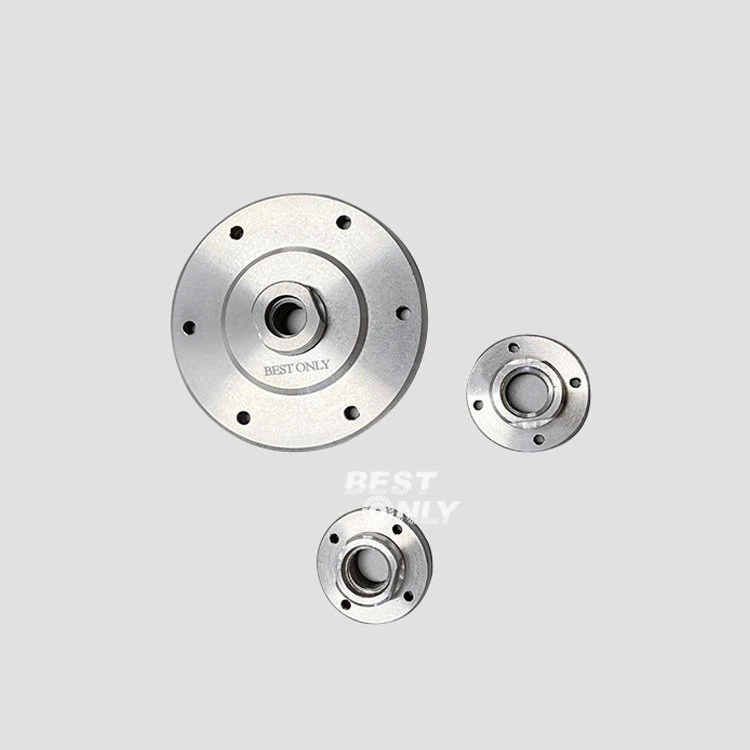
Spindle pads: These pads are suitable for PSA or hook-and-loop discs with smaller diameters and often include threaded shanks for attachment.
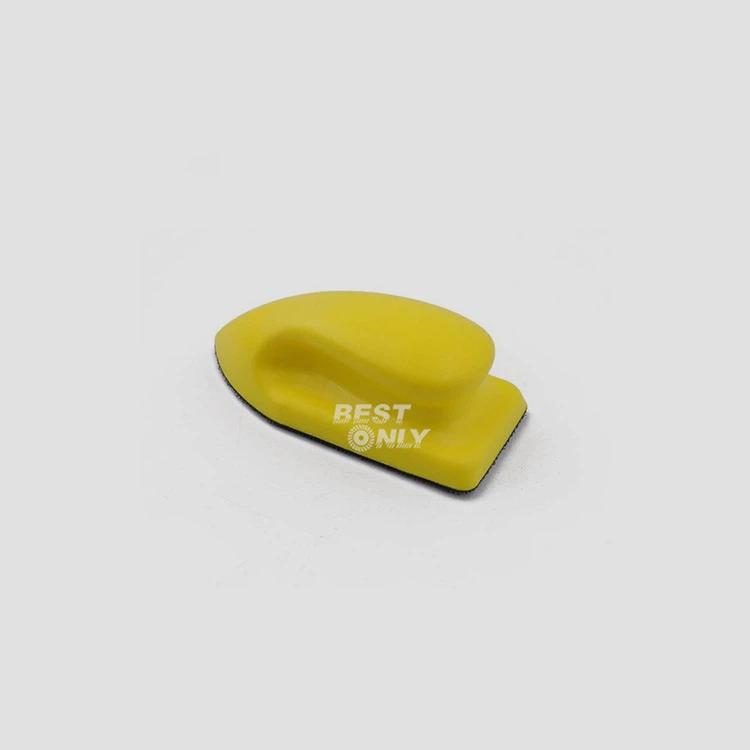
Hand sander backup pads: These foam pads provide the comfort and softness necessary to replace finger sanders. Straps hold the pad firmly in position to allow for even sanding.
Palm sander pads: These pads allow you to use standard hook and loop or PSA sanding discs for palm sanding applications. They come with finger indentations to increase their ergonomic comfort.
No-spin backer pads: The free-floating disc on top of a no-spin pad minimizes potential damage to vertical surfaces.
Zero-burn backer pads: These pads enable multi-directional movement in standard power tools. Additionally, they work to control your power tool's temperature, which can prevent overheating.
For more product details, please click here.
What Is the Difference Between Medium and Hard Foam Backing Pads
Foam Backing Pads are an important component of sanding tools. The Backing Pad serves as a base where the sandpaper is attached securely. Foam Backing Pads feature a hook-and-loop design, making attachment to the backing pad easy and secure. Sanders have been configured to be balanced in line with the weight of the backing pad, giving even weight distribution.
Sanders already have lower vibrations than other sanders, and the Foam Backing Pad aids the reduction of vibration. It acts as a cushioning barrier that dulls vibrations from the machine. This, in turn, reduces the likelihood of more serious injuries like white finger or carpal tunnel syndrome.
Foam Backing Pads help to reduce the amount of maintenance required on the sanding machine. As a protective interface between the abrasive disc and the sanding machine, the backing pad absorbs some of the impact of the vibrations generated from the motor, which helps to prevent excessive wear and tear on the sander's internal parts.
During prolonged sanding sessions, friction between the abrasive material and the workpiece can generate heat. The backing pad acts as a buffer, dissipating some of this heat. By preventing excessive heat buildup, it helps protect the sander's components, such as the motor and gears, from overheating and potential damage.
Backing Pads have also been designed to be used with dust extraction, which helps to prevent dust from getting into the sander's internal components. Dust extraction also helps to maintain a clean workspace and prolongs the life of the abrasive as well.
If your sanding project requires a dead-flat surface, the Hard backing pad is ideal because it is more rigid and has less flexibility than the Medium Backing Pad. This rigidity means that there is less give when pressure is applied.
Hard backing pads are typically used for coarse sanding tasks where a flat and uniform surface is essential.
They are also very useful when doing edges, where you do not want a rounded edge.
The medium-density Backing Pad comes in the box with your tool. A medium backing pad is more flexible than a hard one but still provides some rigidity.
The increased flexibility allows for better conforming to curved or uneven surfaces while maintaining a degree of control. Medium backing pads are suitable for general-purpose sanding and can strike a balance between aggressive material removal and surface finesse.

High-Quality Foam Backing Pads for Professional and Industrial Use | Wholesale & Bulk Purchase
To ensure your power sander's proper function, change your backing pad regularly.
In general, you should change your backing pad at least once a month. This rule of thumb may also vary based on how often you use a particular machine and the types of projects you use it for. If you don't use the sander very often, you should be able to stretch the change interval out to every three to six months.
Here are some other signs that it's time to switch out your backing pad:
Color change: Compare your old pad to a new one. If it looks faded, the foam is likely degrading, and it's time to switch out the pad.
Worn face material: Look at the face material on both the pad and sanding disc. If hooks are broken or wearing off, or if you find adhesive buildup on the pad, you will need to replace it.
Worn edges: Examine your pad's edges. If the foam looks cracked or worn, you need a new pad.
If you're using a hook and loop pad, you can test the condition of the hooks by covering about a third of the pad with your sanding disc. If you're still able to lift the disc, the pad is still usable.
How to Choose Foam Backing Pads
Size, Speed, and Pressure
Disc size, especially diameter, is an important factor in deciding which backing pad to use. You'll want to match your pad to your disc - too big, and your disc won't cover the right amount of space. Too small, and your disc might fly off.
Wider Foam Backing Pads have more control than smaller ones. Larger Foam Backing Pads and pads are best for applications involving wide, flat surfaces or rounded contours. Smaller pads are best for narrower contours and small surfaces.
Depending on the speed you'll be using, you'll need a Foam Backing Pad size.
8-inch pads: 10,000 RPM
5- and 6-inch pads: 12,000 RPM
3-inch pads: 13,000 RPM
The pressure you apply is also essential, as choosing the wrong pad for the job could result in negative consequences. For example, high-pressure applications benefit from thinner backing pads because too much force can cancel out the cushioning effect altogether. Subsequently, this can cut off the backing plate rotation and potentially harm your surface.


Design Features
A beneficial feature in both backing pads and pad protectors is heat-dissipating holes, which will help prevent your sander from overheating.
Additionally, the pad's face may be patterned or solid - this will match the vacuum holes on your sanding disc.
The backing pad you choose should have features that will pair well with your abrasive disc.
Attachment Type
How your sanding disc connects to your backing pad is another critical component to consider. While the attachment type does not significantly affect your final product, it can make your project more or less enjoyable.
Hook and loop: This attachment type is similar to Velcro in that the tiny hooks on the backing pad grab onto the small fabric loops on the sanding disc. People who prefer this type like Velcro's secure grip and the ease of swapping out sanding discs.
Pressure-sensitive adhesives: PSA-coated surfaces stick together when you apply pressure. These discs are easy to attach and remove, which some people find more convenient.
Sander Backing
The combination of materials you use on a sander can significantly impact your project. The backing is one essential component that interacts with your backer pad, especially concerning the pad's flexibility.
Foam Backing Pad and Method of Manufacture Thereof
Foam backing pads are used in many backing and polishing operations where synthetic or natural fiber pads, such as tufted wool pads, had previously been used. In particular, open-cell polyurethane foam pads, with both reticulated and non-reticulated cell structures, have become particularly popular. However, despite the actual advantages of polymer foam pads over fibrous and tufted pads, there are still several inherent disadvantages attendant to the use of foam pads. These disadvantages include "chatter" or jumping of the pad by excess frictional surface contact between flat working surface portions of the pad and the surface of the work being finished; splattering of the polish or other finishing compound as a result of the compound being thrown radially outwardly by centrifugal force; and, burning of the surface of the work being finished by the high speed outer edge portions of the rotary pad.
Initially, foam pads were made of a generally cylindrical disc with a flat planar working face and, typically, with a radiused outer edge providing the transition between the working face and the outer cylindrical edge face. However, flat pads are particularly subject to chatter and provide little deterrent to the splatter of polish. Flat-faced pads also give the operator little control over variations in the working surface actually in contact with the work surface being finished or polished. One attempt at solving the problems presented by flat foam backing pads was the introduction of backing pads having working surfaces with a convoluted or waffle shape.
The rotary foam backing pad and the manner in which it is manufactured provide a unique solution to all of the foregoing problems with prior art foam backing pads. The result is a pad with superior performance in the elimination of chatter, prevention of polish splatter, and operator control of the working surface contact area.
The outer contact surface provides an area of continuous working contact and encloses the central contact surface, precluding any substantial working contact by the central contact surface when the pad is generally uncompressed, but providing increased radial inward expansion of the area of working contact with increasing pad compression. The concave central contact surface extends radially inward from the outer contact surface to a central area of maximum concavity. The backing pad includes a mounting face opposite the contact surface and an annular edge face which extends between and joins the mounting face and the outer contact surface.
The outer peripheral first contact surface preferably comprises a planar annular band. The inner concave contact surface may be conical or spherical. The pad may include a central opening that extends through the pad body on its rotational axis. Further, the annular edge face of the pad, which joins the working face and the mounting face, may be generally cylindrical or frustoconical and, in the latter case, has a maximum diameter where it joins the working face. The mounting face of the pad adapts to the same for attachment to a backing plate, either with a permanent connection or with a demountable fastener, such as a hook and loop type fastening system.
In accordance with a preferred method for making a rotary foam backing pad, a generally cylindrical preform of foam material is utilized, which preform has generally flat parallel front and rear faces which are interconnected by a cylindrical edge face, the method comprising the steps of: rotating the preform on its axis, and dynamically forming a concave working face on the front face during rotation. The method may also include the step of dynamically forming a conical surface on the edge face during rotation. The preform is preferably rotated by supporting the same by its rear face on the backing plate, and grinding the front face of the pad while it is being rotated to move material from the face to provide the concave working face. The grinding step preferably includes texturizing the working face to enhance backing performance. The edge face may also be ground and texturized similarly.
FAQ
Q: What is a foam backing pad?
Q: Advantages of foam backing pads?
Q: Types of foam backing pads?
Q: What is the difference between medium and hard foam backing pads?
Q: Foam backing pads maintenance?
Q: How to choose foam backing pads?
Q: Foam backing pad and method of manufacture thereof?
Q: Do Foam Backing Pads wear out?
Q: How to maintain Foam Backing Pads?
Q: How often should I replace my Foam Backing Pad?
Hot Tags: Affordable foam backing pads for industry, China Affordable foam backing pads for industry suppliers, manufacturers, factory, Snail Lock Backing Pads, Snail Lock Backing Pads, , ,


