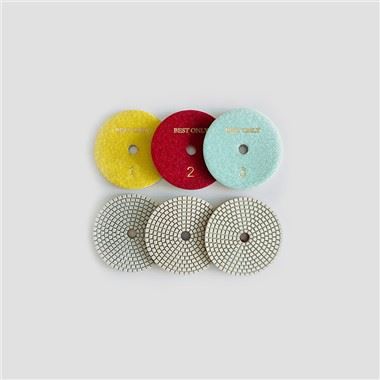
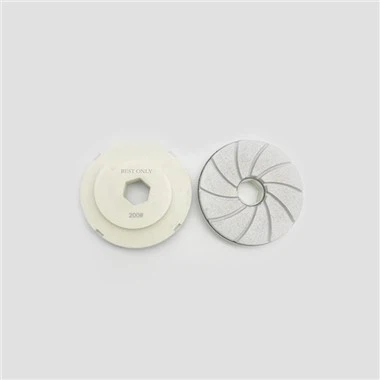
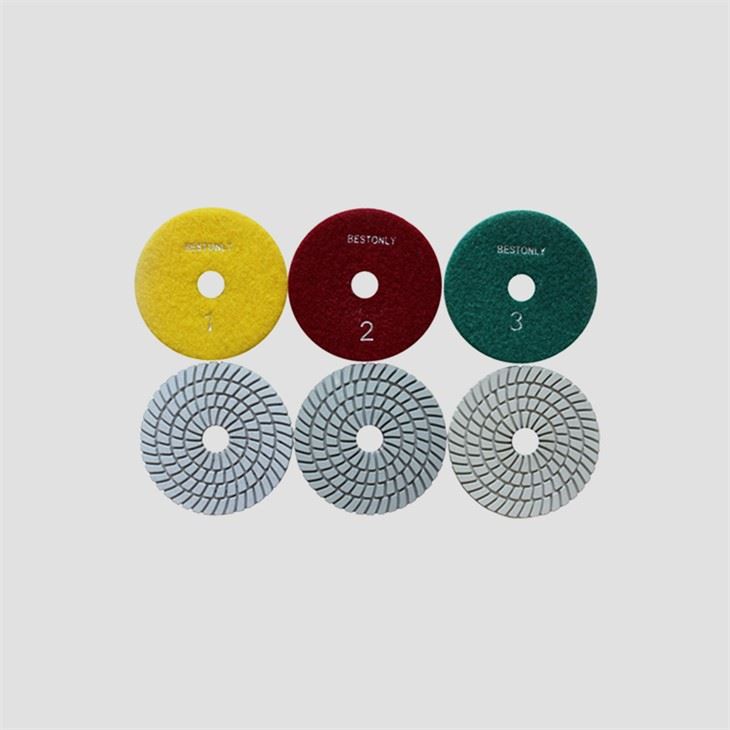
Dry Diamond Polishing Pads Universal
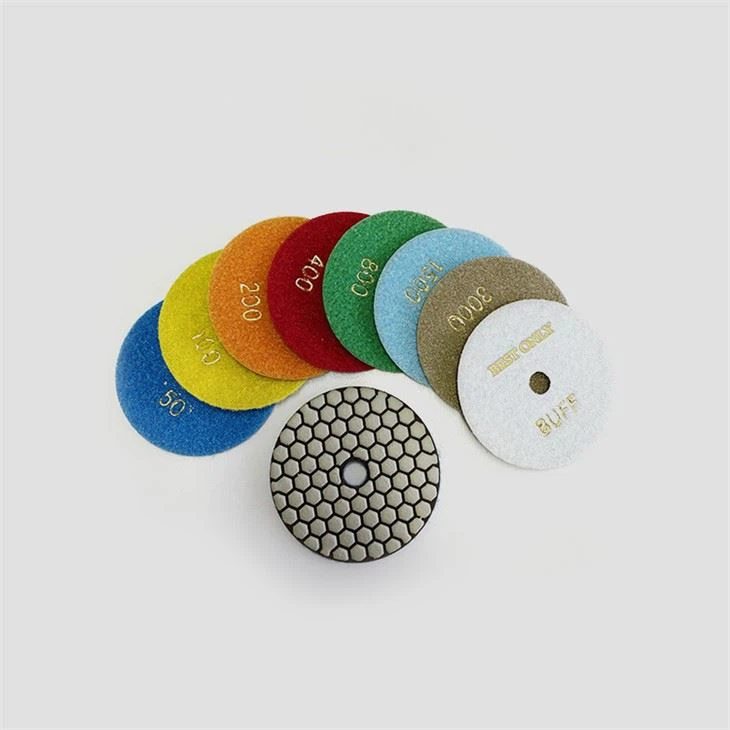
Dry diamond polishing pads are a versatile and essential tool for achieving a high-quality finish on various stone surfaces. These pads are specifically designed for use without water, making them ideal for on-site touch-up applications where water usage is not practical. With their unique composition of diamond powder, bonding agents, and additives, dry diamond polishing pads deliver exceptional results on materials like granite, marble, and engineered stone.One of the key advantages of dry diamond polishing pads is their flexibility, allowing them to efficiently polish not only the top surface of the stone but also its edges, corners, and cutouts for sinks. The pads feature a hexagon matrix design, which enhances their aggressiveness and flexibility during the polishing process.
Description
Xiamen Best Only Diamond Tools which is located in beautiful seaside City Xiamen was established in 2013. We are one of the best diamond tools suppliers in China. As our company name " BEST ONLY", our company slogan is: To do the best , or not to do !With over 10 years diamond tools production and exporting experience, We are dedicated to providing you diamond tools with both competitive prices and high quality effectively. Our products are welcome in the market of Europe, North and South American, South-East Asia, Middle Asia, etc. Good reputation has won praise and trust from home and abroad.



Why Choose Us
Our Factory
Xiamen Best Only Diamond Tools which is located in beautiful seaside City Xiamen was established in 2013. We are one of the best diamond tools suppliers in China. As our company name " BEST ONLY", our company slogan is: To do the best , or not to do !
Our Product
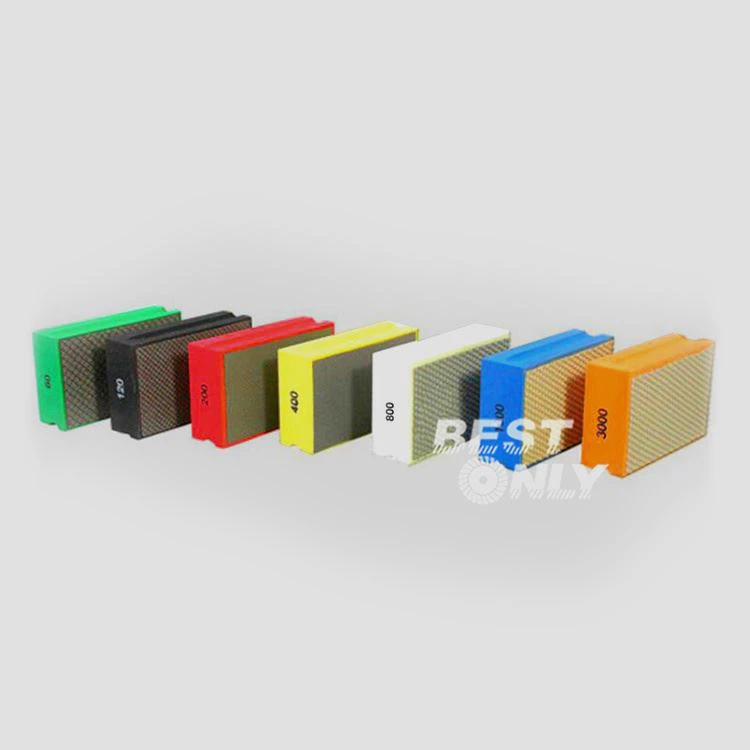
Xiamen Best Only Diamond Tools is specialized in different types of stone processing tools. Our main products including Resin Diamond Polishing Pads, 3 Steps Diamond Polishing Pads, Dry Diamond Polishing Pads, Wet Diamond Polishing Pads, Metal Diamond Polishing Pads,Diamond Cup Wheels, Diamond Milling Wheels, Electroplated Diamond Polishing Pads, Diamond Polishing Belts, Diamond Polishing Sheets, Diamond Hand Polishing Pads, Diamond Core Bits, Diamond Brushes,Backing Pads, CNC Router Bits, Engraving Tools ,etc.
Product Application
Xiamen Best Only Diamond Tools products are widely used in the grinding andpolishing field of natural stone, sintered stone, engineer stone, ceramic, and concrete, etc.
Production Market
With over 10 years diamond tools production and exporting experience, We are dedicated to providing you diamond tools with both competitive prices and high quality effectively. Our products are welcome in the market of Europe, North and South American, South-East Asia, Middle Asia, etc. Good reputation has won praise and trust from home and abroad.
Dry diamond polishing pads are a versatile and essential tool for achieving a high-quality finish on various stone surfaces. These pads are specifically designed for use without water, making them ideal for on-site touch-up applications where water usage is not practical. With their unique composition of diamond powder, bonding agents, and additives, dry diamond polishing pads deliver exceptional results on materials like granite, marble, and engineered stone.One of the key advantages of dry diamond polishing pads is their flexibility, allowing them to efficiently polish not only the top surface of the stone but also its edges, corners, and cutouts for sinks. The pads feature a hexagon matrix design, which enhances their aggressiveness and flexibility during the polishing process.
Advantages of Dry Diamond Polishing Pads Universal
Versatility
Dry diamond polishing pads are designed to work on a variety of stone surfaces, including granite, marble, engineered stone, quartz, and natural stone. This versatility makes them suitable for a wide range of projects.
Convenience
Unlike wet polishing pads that require water, dry diamond pads can be used without the need for water. This makes them ideal for on-site touch-up applications where using water is not practical or feasible.
Aggressiveness
Dry diamond pads are known for their aggressive cutting action, which allows for efficient material removal. This makes them particularly effective for initial grinding and shaping of the stone surface.
Long-lasting
The combination of high-quality diamonds and a strong resin bond in dry diamond pads ensures their durability and long-lasting performance. This means that fabricators and installers can rely on these pads for extended use without frequent replacements.
Flexibility
Dry diamond pads are designed to be flexible, allowing for easy polishing of not only the top surface of the stone but also the edges, corners, and cutouts for sinks. This flexibility ensures consistent and uniform polishing results.
Excellent Polishing Results
Dry diamond pads are specifically engineered to deliver exceptional polishing results. The progressive grit sequence, starting from lower grits for grinding and progressing to higher grits for a polished finish, ensures a smooth and shiny surface.
Wet Polishing Pads vs. Dry Polishing Pads
Wet and Dry Polishing Similarities
The Tools
The tools used to perform polishing on granite, marble, or other materials are very similar in nature. First, both processes use some sort of grinder that can be used to spin a series of "pads" or "discs" at a high rate of speed. These discs (or pads) vary in how coarse the surface is. This is similar to how sandpaper is described for woodworking. These pads are designed in a particular way.
The polishing pads are very frequently designed with a hook and loop style backing that allows for easy fastening and removal from the grinding machine. The surface that is used to actually polish the natural or engineered stone is made from a resin that has diamond dust suspended inside the pad.
The Process
The process also has similarities. Whether you are wet polishing or dry polishing, the process works like this; You begin with a coarse polishing pad and you grind the surface of the stone with it for the proper amount of time. You then repeat that action with a pad that has a finer "grit". Again, this is much like sanding wood only the process is used on stone. This is repeated for the number of steps required based on the polishing pad system you are using. Once you have completed the series, you have a smoothly polished stone surface.
Even though the polishing tools and methods are the same there are differences between them. Those differences will be discussed next.
Differences Between Wet and Dry Polishing
There are a couple of main differences between the wet and dry stone polishing techniques. These differences are primarily influenced by 1) The pad design and 2) The work environment.
.
The Design of the Pads
The polishing pads tend to heat up as they are used to wear away the stone's surface.
Dry polishing pads are designed to withstand a higher temperature than are the wet pads. Yet, wet polishing can sometimes provide a higher degree of shine due to the fact that the pads are kept cooler. However, technology has now produced dry pads that can compete very well with wet pads.
The Work Environment
The cooling of the pads is one of the functions of the water used in the wet polishing technique. Another task the water performs is the cleaning away the dust that is generated from the wearing down of the stone.
The necessary presence of water in the environment means that the fabricator will most likely need to have an area designed specifically for wet polishing. The water can create quite a mess and setting up a wet polishing environment in the customer's home is just not practical. Therefore, using wet polishing pads is usually better suited for a fabrication shop.
Dry polishing pads do not require the water to cool the pads. Because of this dry pads are potentially a better choice on site polishing and installs. They do however cause dust in the environment. This can require you to utilize some sort of dust collection system to remove the particles form the air to keep the environment clean.
How to Choose Dry Diamond Polishing Pads
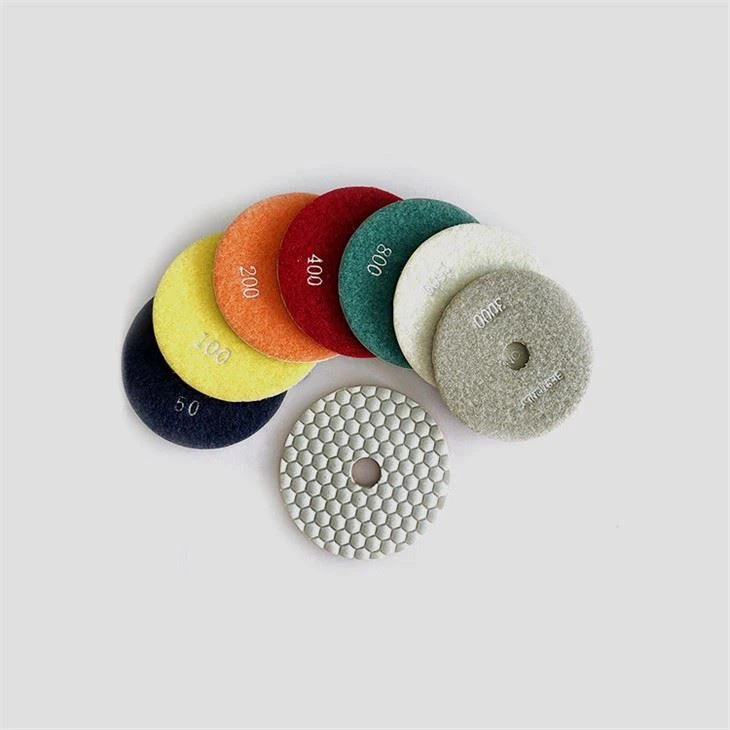


Grit Size
The grit size of a dry diamond polishing pad determines its aggressiveness and the level of surface refinement it can achieve. Pads with lower grit numbers (e.g., 50-200) are ideal for coarse grinding and removing deep scratches or imperfections. As you progress to higher grits (e.g., 400-3000), the pads become finer, facilitating smoother polishing and enhancing the surface's luster.
Pad Material
Dry diamond polishing pads come in different materials, including resin, metal, and hybrid variations. Resin pads are versatile and suitable for most applications, providing consistent polishing results without leaving deep scratches. Metal pads, on the other hand, are more aggressive and primarily used for coarse grinding or removing tough coatings. Hybrid pads combine the benefits of both resin and metal, offering enhanced durability and performance across various surfaces.
Bonding Agent
The bonding agent used in dry diamond polishing pads affects their durability and effectiveness. Resin-bonded pads are popular for their flexibility and ability to conform to curved surfaces, making them suitable for intricate polishing tasks. Metal-bonded pads, on the other hand, excel in heavy-duty grinding applications, thanks to their superior strength and longevity. Evaluating the bonding agent's quality ensures consistent performance and longevity of the polishing pads.
Pad Diameter
The diameter of a dry diamond polishing pad dictates its coverage area and compatibility with different polishing machines. While larger pads cover more surface area, they may be less maneuverable in tight spaces. Conversely, smaller pads offer greater precision and control, making them suitable for detail-oriented tasks. Selecting the appropriate pad diameter ensures efficient polishing and optimal results, considering the size and nature of your project.
Wet vs. Dry Polishing
Dry diamond polishing pads can be used with either wet or dry polishing techniques, each offering unique advantages depending on the application. Wet polishing helps to control dust and prevent overheating, resulting in smoother finishes and prolonging the lifespan of the pads. Dry polishing, on the other hand, offers convenience and portability, making it ideal for certain environments where water may not be readily available. Understanding the pros and cons of each method helps determine the most suitable approach for your project.
Compatibility
Before purchasing dry diamond polishing pads, it's essential to ensure compatibility with your polishing equipment or machinery. Check the pad's specifications, including arbor size and mounting type, to ensure seamless integration with your existing tools. Investing in compatible pads not only ensures optimal performance but also minimizes the risk of damage to your equipment during operation.
Tips for Using Dry Diamond Polishing Pads
Proper Technique: It's important to use the right technique when using dry diamond polishing pads. Start with the lowest grit pad and work your way up to the higher grits. Apply even pressure and move the pad in a circular motion to ensure consistent polishing.
Speed and Pressure: The speed at which you move the pad and the amount of pressure you apply can greatly impact the results. It's important to find the right balance. Too much pressure can cause the pad to wear out quickly, while too little pressure may not achieve the desired polish.
Waterless Polishing: Dry diamond pads are designed for use without water, which makes them ideal for on-site touch-ups or situations where using water is not practical. However, it's important to note that using dry pads on certain materials, such as engineered stone, may generate more heat. To prevent overheating, periodically stop and allow the surface to cool.
Pad Maintenance: To prolong the life of your dry diamond pads, it's important to clean them regularly. After each use, remove any debris or residue from the pads using a brush or compressed air. This will help maintain the pad's effectiveness and prevent clogging.
Safety Precautions: When using dry diamond pads, it's important to wear appropriate safety gear, such as safety glasses and a dust mask. The polishing process can generate dust and debris, so taking these precautions will help protect your eyes and respiratory system.
Applications of Dry Diamond Polishing Pads
Granite Countertops: One of the primary applications of dry diamond polishing pads is for polishing granite countertops. These pads are designed to effectively remove scratches, stains, and blemishes, leaving the granite surface smooth and glossy. With different grit options available, you can achieve the desired level of polish on your granite countertops.
Marble Surfaces: Dry diamond polishing pads are also ideal for polishing marble surfaces. Whether it's a marble floor, wall, or countertop, these pads can effectively restore the natural shine and luster of the marble. The pads work by removing imperfections and creating a smooth, polished finish on the marble surface.
Engineered Stone: Dry diamond polishing pads can be used for polishing engineered stone surfaces, such as quartz. These pads are designed to work effectively on engineered stone, providing a high-quality finish without causing any damage to the surface. They can remove scratches, dullness, and other imperfections, giving the engineered stone a beautiful, polished appearance.
Natural Stone: Dry diamond polishing pads are suitable for polishing various types of natural stone, including limestone, travertine, and slate. These pads can enhance the natural beauty of the stone, bringing out its unique colors and patterns. They can also help in removing scratches and restoring the shine of the natural stone surfaces.
On-Site Touch-Up: Dry diamond polishing pads are great for on-site touch-up applications where using water is not practical or feasible. Whether it's a small repair or a quick polish, these pads can be used to achieve excellent results without the need for water.
Maintenance and Care for Dry Diamond Polishing Pads
Clean the Pads Regularly: After each use, it is important to clean the diamond polishing pads thoroughly. Rinse them with water to remove any debris, residue, or particles that may have accumulated during the polishing process. This will prevent the pads from becoming clogged and ensure optimal performance.
Store Pads Properly: When not in use, store the diamond polishing pads in a clean and dry area. Avoid placing them on rough or abrasive surfaces that could damage the pads. It is recommended to keep them in a designated storage container or bag to protect them from dust and potential damage.
Inspect for Wear and Tear: Regularly inspect the diamond polishing pads for any signs of wear and tear. Look for fraying edges, loss of diamond particles, or any damage that may affect their performance. If any defects are found, replace the pads immediately to maintain consistent and high-quality results.
Use Pads for Their Intended Purpose: Diamond polishing pads are designed for specific materials and purposes. Avoid using them on surfaces or materials they are not intended for, as this can lead to poor performance and potential damage. Always refer to the manufacturer's guidelines and recommendations for proper usage.
Rotate Pads: To ensure even wear and prolong the lifespan of your diamond polishing pads, rotate them regularly during use. This will distribute the workload evenly and prevent excessive wear on specific areas of the pads.
Use Proper Pressure and Speed: When using diamond polishing pads on marble floors, it is crucial to apply the right amount of pressure and maintain the recommended speed. Excessive pressure can cause damage to the pads and the surface, while insufficient pressure may result in ineffective polishing.
FAQ
Q: Can dry diamond polishing pads be used on granite countertops?
Q: Are dry diamond polishing pads easy to use?
Q: How do I choose the right dry diamond polishing pad grit for my granite?
Q: Can I use dry diamond polishing pads without water?
Q: How long do dry diamond polishing pads last?
Q: Can dry diamond polishing pads be used on other stone surfaces?
Q: Are dry diamond polishing pads suitable for both professional and DIY use?
Q: What types of surfaces can dry diamond polishing pads be used on?
Q: How do I clean and maintain dry diamond polishing pads?
Q: Can dry diamond polishing pads be used with any polishing machine?
Hot Tags: dry diamond polishing pads universal, China dry diamond polishing pads universal suppliers, manufacturers, factory, extra fine polishing tools, terrazzo polishing equipment, turbo diamond polishing tools, natural stone polishing, stone polishing service, glass polishing tools