

What is the working principle of grinding cup wheels?
Sep 10, 2025
As a seasoned supplier of Grinding Cup Wheels, I've witnessed firsthand the transformative power of these remarkable tools in the stone processing industry. In this blog post, I'll delve into the working principle of Grinding Cup Wheels, explore their applications, and highlight the key factors that contribute to their efficiency and performance.
The Basics of Grinding Cup Wheels
Grinding Cup Wheels are specialized tools designed for grinding, shaping, and polishing various types of stone, including granite, marble, and concrete. They consist of a metal hub, a diamond-impregnated rim, and a bonding agent that holds the diamonds in place. The diamonds are the cutting agents, and their size, concentration, and quality determine the wheel's cutting ability and lifespan.
Working Principle of Grinding Cup Wheels
The working principle of Grinding Cup Wheels is based on the abrasive action of the diamonds embedded in the rim. When the wheel rotates at high speed and comes into contact with the stone surface, the diamonds act as tiny cutting edges, removing small particles of the stone material. This process is known as abrasion, and it results in the shaping, smoothing, and polishing of the stone surface.
There are two main types of grinding processes: dry grinding and wet grinding. Dry grinding is typically used for rough shaping and initial grinding, while wet grinding is used for finer finishing and polishing. In wet grinding, water is used as a coolant and lubricant to reduce heat and friction, prevent the diamonds from overheating and wearing out quickly, and improve the quality of the finished surface.
Key Factors Affecting the Performance of Grinding Cup Wheels
Several factors can affect the performance of Grinding Cup Wheels, including the type of stone being processed, the hardness and density of the stone, the size and concentration of the diamonds, the bonding agent, and the operating conditions.
- Type of Stone: Different types of stone have different hardness and density, which require different types of Grinding Cup Wheels. For example, granite is a hard and dense stone that requires a wheel with a high concentration of large diamonds, while marble is a softer stone that can be processed with a wheel with a lower concentration of smaller diamonds.
- Hardness and Density of the Stone: The hardness and density of the stone also affect the cutting speed and the lifespan of the Grinding Cup Wheels. Harder and denser stones require more pressure and slower cutting speeds to prevent the diamonds from wearing out quickly, while softer stones can be processed at higher speeds.
- Size and Concentration of the Diamonds: The size and concentration of the diamonds in the Grinding Cup Wheels determine the cutting ability and the surface finish of the stone. Larger diamonds are more aggressive and can remove more material quickly, but they also leave a rougher surface finish. Smaller diamonds are less aggressive and produce a smoother surface finish, but they require more time and pressure to remove the same amount of material.
- Bonding Agent: The bonding agent is the material that holds the diamonds in place in the Grinding Cup Wheels. Different types of bonding agents have different properties, such as hardness, toughness, and heat resistance, which affect the performance and lifespan of the wheels. For example, a hard bonding agent is suitable for grinding hard and dense stones, while a soft bonding agent is more suitable for grinding softer stones.
- Operating Conditions: The operating conditions, such as the speed, pressure, and feed rate of the Grinding Cup Wheels, also affect their performance. Higher speeds and pressures can increase the cutting efficiency, but they also increase the risk of overheating and wearing out the diamonds. Lower speeds and pressures can produce a smoother surface finish, but they require more time and energy to complete the job.
Applications of Grinding Cup Wheels
Grinding Cup Wheels are widely used in the stone processing industry for a variety of applications, including:
- Shaping and Profiling: Grinding Cup Wheels can be used to shape and profile the edges of stone slabs, tiles, and countertops. They can create a variety of profiles, such as bullnose, ogee, and beveled edges, to enhance the aesthetic appeal of the stone products.
- Smoothing and Polishing: Grinding Cup Wheels can be used to smooth and polish the surface of stone slabs, tiles, and countertops. They can remove scratches, stains, and other imperfections, and produce a high-gloss finish that enhances the beauty and durability of the stone products.
- Removing Glaze and Coating: Grinding Cup Wheels can be used to remove glaze and coating from the surface of ceramic tiles, porcelain tiles, and other types of tiles. They can restore the original appearance of the tiles and prepare them for re-glazing or re-coating.
- Cleaning and Maintenance: Grinding Cup Wheels can be used to clean and maintain the surface of stone floors, walls, and other surfaces. They can remove dirt, grime, and other contaminants, and restore the shine and luster of the stone surfaces.
Related Products
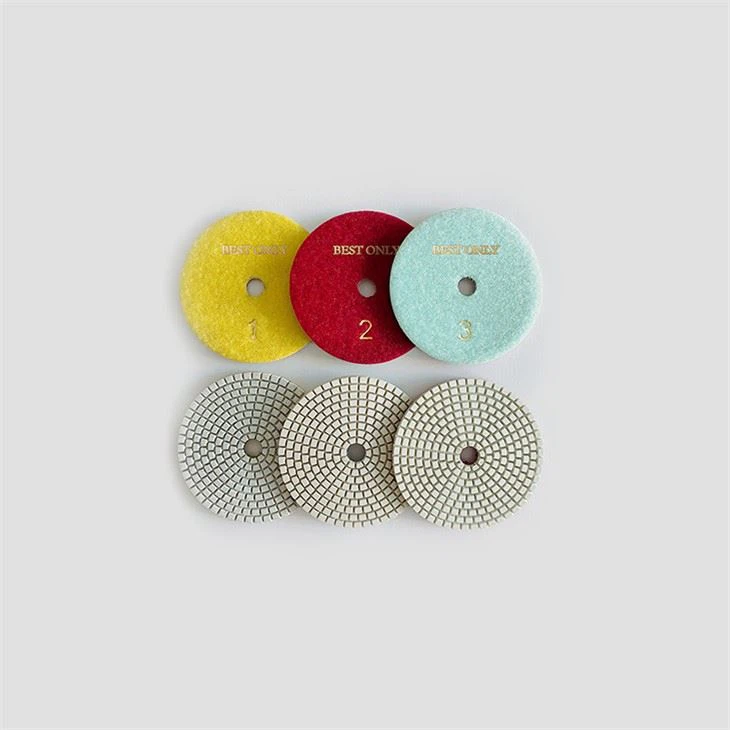
In addition to Grinding Cup Wheels, we also offer a wide range of other stone processing tools and products, including Granite Turbo Cutting Blade, 3 Steps Dry and Wet Polishing Pads, and 5 Steps Wet Polishing Pads. These products are designed to work together to provide a complete solution for the stone processing industry.
Conclusion
Grinding Cup Wheels are essential tools in the stone processing industry, offering a versatile and efficient way to shape, smooth, and polish various types of stone. By understanding the working principle of Grinding Cup Wheels and the key factors that affect their performance, you can choose the right wheels for your specific application and achieve the best results.
If you're interested in learning more about our Grinding Cup Wheels or other stone processing tools and products, please don't hesitate to contact us. We'd be happy to discuss your needs and provide you with a customized solution that meets your requirements.

References
- "Stone Processing Technology" by John Smith
- "Diamond Tools for Stone Cutting and Polishing" by Jane Doe
- "The Science of Abrasive Grinding" by Robert Johnson