Classification Of Polishing Products
Nov 10, 2021
As we all know, many metal and non-metal processing and manufacturing industries are inseparable from the process of polishing. Since polishing has very small requirements for machining allowance, especially for the processing of products with special finish, polishing products should be selected, so as to improve the work efficiency as much as possible when the surface meets the requirements. Commonly used polishing products are as follows:
1. Polishing sand: it is widely used for polishing hardware parts, plates, mechanical accessories, plastic products, non-metallic materials and other industries. According to its material, it includes alumina sand, brown corundum sand, emery, black corundum sand, white corundum sand, steel sand, green silicon carbide sand Glass bead (also known as glass sand), etc. among these materials, some require that the abrasive particles must be round, such as glass beads, while others require that the abrasive particles should be sharp, such as emery. Therefore, this should be determined according to the requirements of the polishing effect of the product. The same polishing abrasive has completely different processing effects due to different particle sizes, ranging from coarse to fine, such as No. 24, No. 36 and No. 60 , 80, 100, 120, 150, 180 ', 220, 280, 320, 400, 600, 800, 1000, and above 1000. In the actual operation process, most of them are processed by sand blasting, or they directly place the sand on the plane of the workpiece to be processed and polish it by friction.
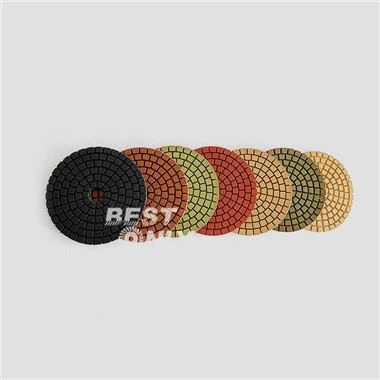
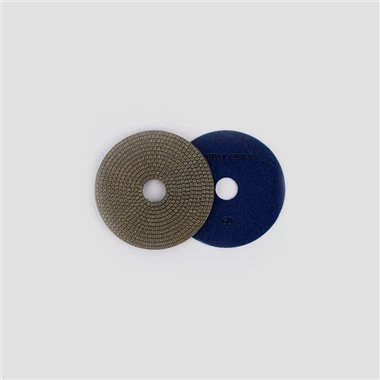
2. Polishing wheel: soft binders such as elastic resin and rubber can be used to make the polishing sand into a specific shape through the mold, or the abrasive can be directly attached to other substrates, such as sponge wheel, wool wheel, wool felt, hemp wheel, cloth wheel, sandpaper, hundred page wheel, thousand page wheel, etc. in addition, there are paste products, such as diamond grinding paste.
3. Polishing oilstone: generally divided into natural oilstone and artificial abrasive oilstone. Natural oilstone is formed by long-term deposition in nature, so its quantity is limited. In most cases, artificial abrasive oilstone can replace natural oilstone, even with better effect, which is more conducive to long-term production. Therefore, it is very helpful to distinguish the materials for the production of oilstone. The abrasives include carbides such as black silicon carbide, green silicon carbide and boron carbide, corundum such as brown corundum, white corundum, red corundum and single crystal corundum, as well as superhard materials such as diamond and cubic boron nitride. Generally, the oilstone used for polishing is relatively fine, including 600, 800, 1000, 1200, 1500, 2000 and 3000. The finer the particle size is, the brighter the polishing effect is. In terms of bonding agent, ceramic bonding agent, resin bonding agent, rubber bonding agent and metal bonding agent can also be selected.