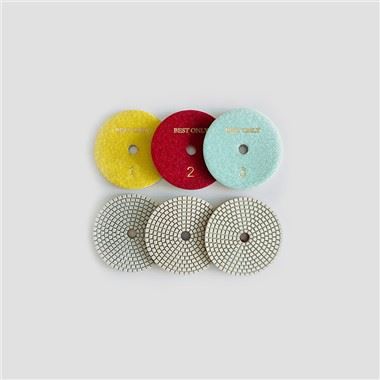
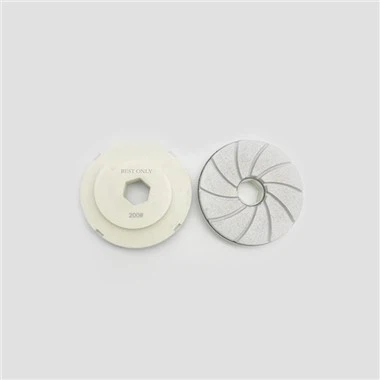
Marble Polishing Pads
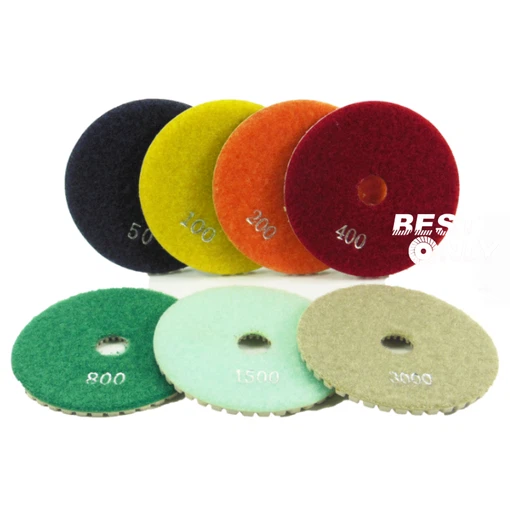
Grit:50#,100#,3000#,800#,200#.400#.1500#
Color: Gray/white
Application: For Marble Granite Engineered Stone
Thickness:3.0mm
Diameter:3-5"/80-125mm
Material:Resin+Diamond
Description
Products Description
One type of use that marble polishing pads are designed for is wet polishing. Wet polishing pads are designed for use in a fabrication shop while water is being applied to the surface being polished. As you can imagine, high speed polishing with resin pads causes friction. This friction heats up the pad and the stone. Water is used to keep the temperature from climbing to a point that can hinder the polishing process. Wet polishing gives one of the best mirror shine finishes, and it has a lower cost of finish. They also polish various surfaces, including porcelain, terrazzo, marble, quartz, limestone, and granite. The pads are more affordable than the dry ones.

Marble polishing pads are an important tool for anyone working with marble surfaces, from a professional marble worker to a DIY enthusiast. They are designed to give marble surfaces a smooth and polished finish, bringing out the natural beauty of the marble.
The pads themselves are made of a variety of materials, including diamond, resin, and other synthetic materials. They come in various sizes and shapes to fit different types of polishing tools.
To use a marble polishing pad, you begin with a rougher, coarser pad that is designed to remove any scratches, stains, or imperfections from the surface of the marble. As you progress, you move on to finer and finer grits until you achieve the desired level of polish.
Marble polishing pads are an effective and efficient tool for creating a smooth, polished finish on marble surfaces. By following the proper techniques and using the right materials, anyone can achieve professional-quality results.
Marble Polishing Pads A Difference In Quality
Resin Bond
When it comes to the quality of bond that is used for a given diamond polishing pad, it is important to choose one appropriate for the task. The resin bond that is used for the polishing pad plays a role in the pad's performance. Well, the resin must be strong enough to hold the diamonds so they can perform their function. Namely, the cutting of the stone surface.
Additionally, the bond must wear down at a particular rate. As the resin bond wears, it exposes diamonds that were not exposed previously. This process continues as the pad wears down; eventually reaching the end of its life. As you can imagine, the type of resin bond will impact the way the polishing pad wears, cuts, and lasts. As a result, a quality polishing pad will have a resin bond that performs best for the task it was made.
Diamond Quality
Diamonds are used in the stone industry because they are extremely hard. This means that they can cut rock. In fact, a stone's hardness is measured on the Mohs scale; a scale on which diamond registers at the highest level (10).
Not only is the quality of the diamonds used in the polishing pad important, but also the diamond concentration. This is due to the reason we just mentioned. Since the diamonds are what cuts the stone, then the quantity and quality of these has a direct impact on the polishing pad's performance.
Pad Flexibility
A polishing pad's flexibility can be exactly what is needed. And, at other times, it may not be what you are after. For example, if the pad is being used to polish edges that are curved, flexibility is exactly what the fabricator needs. Yet not all pads are flexible.
Other pads that are not flexible may be a good choice for polishing flat surfaces. Since many natural stones are comprised of various minerals, large flat surfaces will most likely vary in hardness. If you are polishing a large flat area with a polishing pad that is flexible your polishing pad's performance may not be as good as it could be.


How to Choose the Right Marble Polishing Pad
When it comes to polishing marble, selecting the right polishing pads is crucial for achieving the desired results. With a wide range of options available in the market, it can be overwhelming to make the right choice. To ensure a successful and efficient polishing process, consider the following factors when choosing polishing pads for marble
Grit Size: The grit size of the polishing pads determines the level of abrasiveness. For initial grinding and removing deep scratches, start with a lower grit size, such as 50 or 100. As you progress, move to higher grit sizes to achieve a smoother and more polished finish. It is essential to follow the recommended grit sequence to avoid any damage to the marble surface.
Pad Quality: Opt for high-quality polishing pads that are specifically designed for marble . These pads are made with top-quality and resins, ensuring durability and effectiveness. Look for pads with a high temperature resistance, as they are ideal for larger machines or buffers.
Pad Material: Marble polishing pads are typically made of either diamond or resin. Diamond pads are more durable and are ideal for grinding down the surface of the marble, while resin pads are better for achieving a polished finish.
Wet Use: Polishing pads for marble are generally designed for wet use. Using them with water helps to cool the pads and prevent overheating, resulting in a better polish. Ensure that the pads you choose are suitable for wet polishing and provide optimal performance when used with water.
Compatibility: Check the compatibility of the polishing pads with your polishing machine or grinder. Ensure that the pads can be easily attached to the backing pad of your machine for a secure and efficient polishing process.
Pad Color: Different colored pads serve different purposes. For example, red pads are used for surface scratch and stain removal, orange pads are for refining the surface, yellow pads are for honing and achieving a matte finish, and blue pads are for intensifying the polish and creating a shiny surface.
Project Size: Consider the size of your project and the number of pads you may need. It's always a good idea to have extra pads on hand in case you wear out or require additional pads during the polishing process.
Step-by-Step Guide to Using Marble Polishing Pads
Prepare the Surface: Before you begin, make sure the marble surface is clean and free of any debris or dirt. Use a mild cleaning solution and a soft cloth to remove any stains or residue.
Choose the Right Pad: Select the appropriate marble polishing pad based on the level of polishing required. For initial grinding and removing scratches, start with a lower grit pad. Gradually progress to higher grit pads for a smoother and shinier finish.
Attach the Pad: Attach the marble polishing pad to a power drill or angle grinder using the pad driver attachment. Make sure it is securely fastened to avoid any accidents during the polishing process.
Apply Water: Wet the marble surface with water before starting the polishing process. This helps to lubricate the pad and prevent overheating or damage to the marble.
Start Polishing: Begin polishing the marble surface using slow and steady circular motions. Apply light pressure and let the pad do the work. Make sure to cover the entire surface evenly for consistent results.
Progress to Higher Grits: Once you have achieved the desired level of polish with a particular grit pad, move on to the next higher grit pad. Repeat the polishing process, gradually refining the surface and removing any remaining scratches or imperfections.
Clean and Inspect: After each polishing step, clean the surface with water to remove any residue or slurry. Inspect the surface closely to ensure you are achieving the desired level of shine and smoothness.
Final Polishing: Finish the polishing process with the finest grit pad to achieve a high gloss and mirror-like finish. Take your time and pay attention to detail to achieve the best results.


Precautions When Using Marble Polishing Pads

Skipping grit levels
One of the biggest mistakes people make is skipping grit levels when using marble polishing pads. Each grit level serves a specific purpose in the polishing process, and skipping any of them can result in an uneven finish. It is important to start with a lower grit pad and gradually work your way up to the finer grits for a smooth and glossy finish.
Applying too much pressur
Another common mistake is applying too much pressure while using marble polishing pads. Marble is a delicate stone, and excessive pressure can cause damage and scratches. It is important to let the pads do the work and apply gentle, even pressure to achieve the desired results.


Using dry pads
Marble polishing pads are designed to be used with water or a wetting agent. Using them dry can cause the pads to overheat and lose their effectiveness. Always ensure that the pads are properly lubricated to prevent any damage to the marble surface.
Neglecting proper cleaning
After each step of the polishing process, it is crucial to thoroughly clean the marble surface before moving on to the next grit level. Failure to do so can result in the transfer of coarser grit particles to the finer pads, leading to scratches and an inconsistent finish.

Not following manufacturer's instructions: Each marble polishing pad may have specific instructions and recommendations from the manufacturer. It is important to carefully read and follow these instructions to ensure optimal performance and longevity of the pads.
Hot Tags: marble polishing pads, China marble polishing pads suppliers, manufacturers, factory, resin bonded diamond polishing tools, stone polishing feedback, granite polishing equipment, outdoor polishing tools, marble polishing tools, metal finishing pads